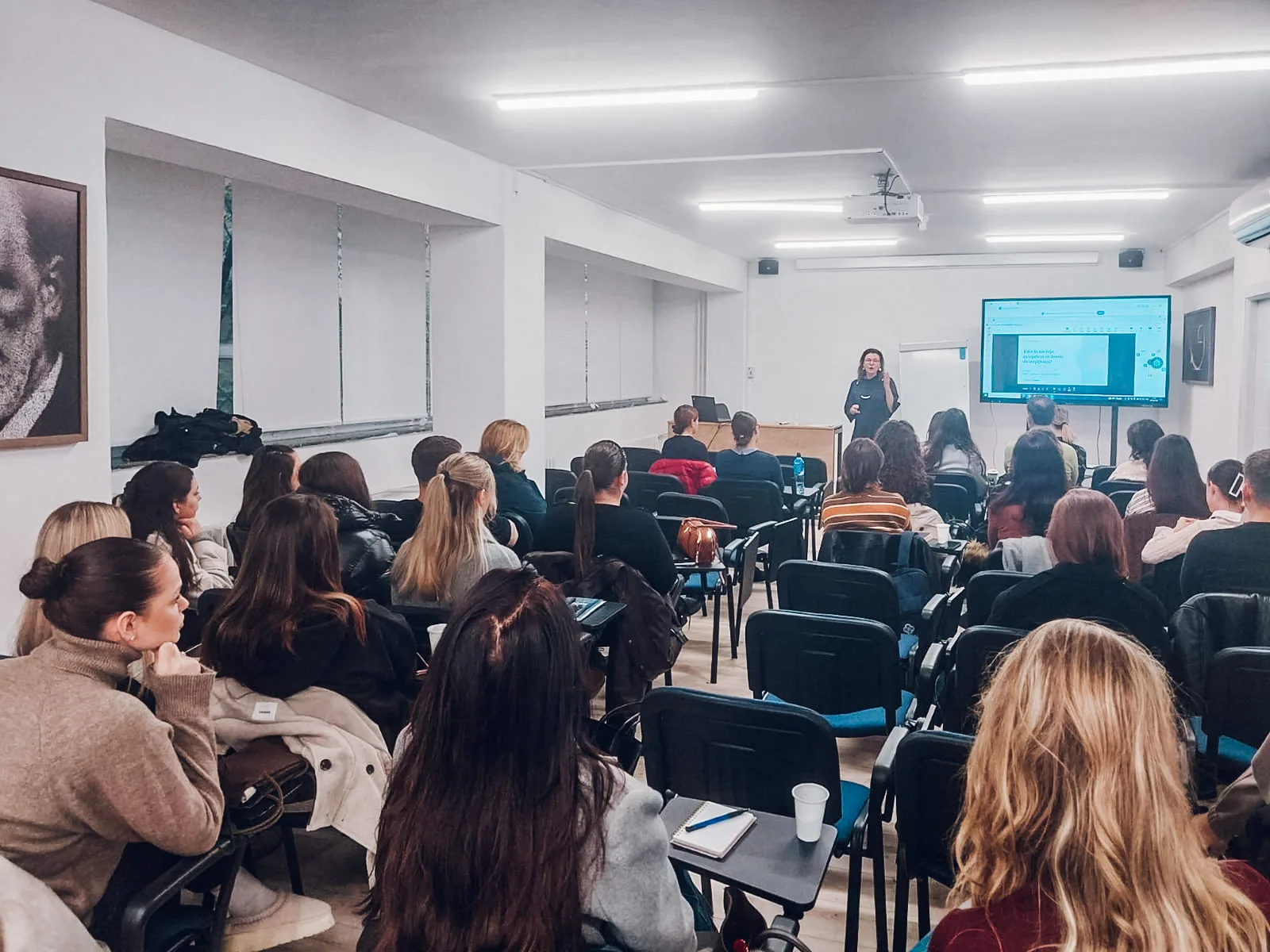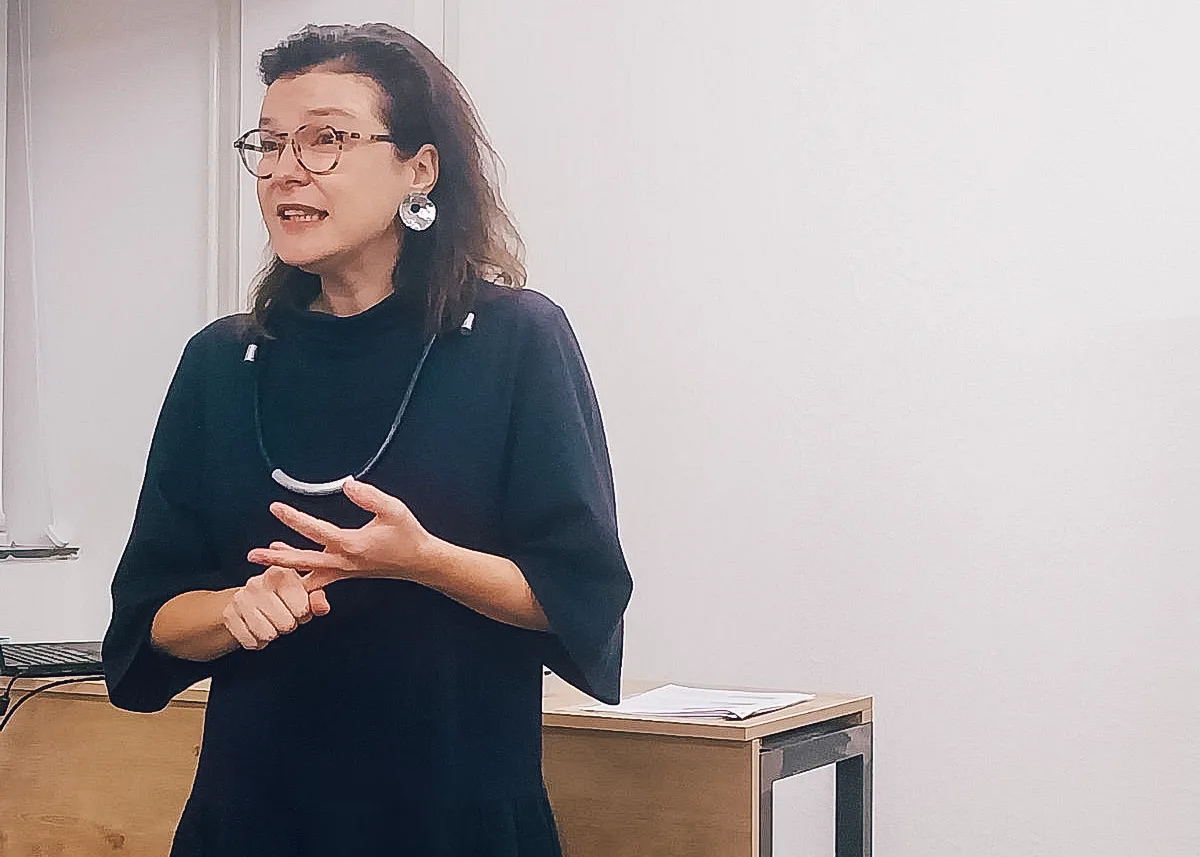

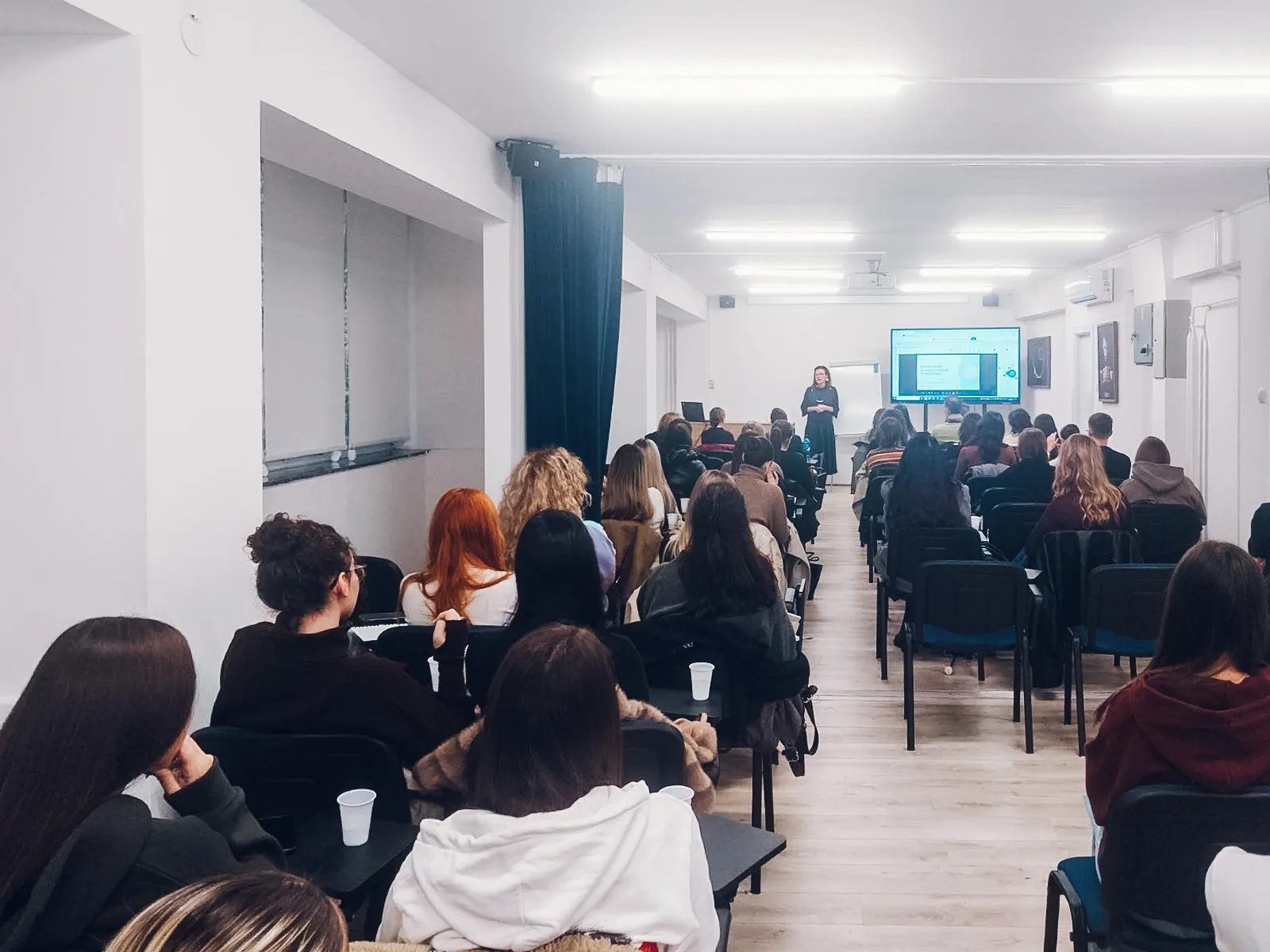
A guest lecture by Prof. Dr. Stanislava Popov titled "How to Ensure Our Desire for Success Does Not Lead to Burnout?" was held at the Faculty of Organizational Studies "Eduka".
Prof. Dr. Stanislava Popov is a psychologist, psychotherapist, and one of the founders of the Mensana Psychological Counseling Center in Novi Sad, with over 20 years of experience in psychotherapy practice.
The lecture was attended by a large number of students, who had the opportunity to better understand the connection between the desire for achievement, perfectionism, and professional burnout through theoretical explanations, research findings, and examples from psychotherapy practice.
Relying on the principles of rational-emotive-cognitive-behavioral therapy (RE&CBT), Prof. Dr. Popov highlighted the importance of beliefs that shape our relationship with success and failure. She particularly examined the absolutist demands we place on ourselves (“I must succeed”), catastrophizing, low frustration tolerance, and the tendency to evaluate our self-worth based on achieved results.
One of the important messages of the lecture was that high standards and ambition are not problematic in themselves. The key difference is between a flexible pursuit of quality, which allows room for mistakes and learning, and perfectionistic worries that turn every failure into proof of personal inadequacy.
Students were also introduced to the concept of unconditional self-acceptance – the ability to distinguish a person's worth from their individual actions, decisions, and achievements. Accepting our fallibility does not mean giving up on development, but rather the possibility of progressing without self-deprecation and excessive self-pressure.
The numerous examples from over two decades of Prof. Dr. Popov's psychotherapy practice added special value to the lecture, allowing students to view theoretical concepts through concrete life and professional situations. Research findings on the role of individual and situational factors in professional burnout were also presented, further emphasizing that the responsibility for preventing burnout cannot be left solely to the individual, but also involves creating healthier work environments.
The lecture took place in a very dynamic atmosphere, with numerous questions and active participation from students, who showed great interest in this topic and its practical implications.
One of the concluding messages of the lecture perhaps best summarizes its essence:
“Success can be our goal, but it does not have to be a measure of our worth.”
Eduka continues to provide students with opportunities to meet prominent experts and connect academic knowledge with contemporary research and experiences from professional practice.